Political & Governmental Analysis

Strategic Leadership Initiatives

Parliamentary Advisory

Regional Diplomacy

Indo-Pacific Affairs by
Professor Dr. Mohammad Mahmodul Hasan

Expertise on


Political & Governmental Landscape

Read More
• I possess an advanced understanding of the political and institutional structures of Indo-Pacific nations, covering federal, parliamentary, hybrid-democratic, and authoritarian systems. • I continuously monitor election cycles, civil-military relations, party ideology shifts, and democratic resilience across South, Southeast, and East Asia. • I analyze regional power rivalries involving China, India, Japan, ASEAN, Australia, and the United States, particularly in relation to maritime security, economic corridors, and defense partnerships. • I provide strategic insights into how geopolitical competition shapes governance, security policies, and diplomatic alignments in the Indo-Pacific region.


Engagement with U.S. Government (White House, Congress, State Department)

Read More
• I align Indo-Pacific analysis with the U.S. Indo-Pacific Strategy, National Security Strategy, and State Department foreign policy directives. • I interpret U.S. Congressional debates, committee hearings, and legislative actions that influence Indo-Pacific diplomacy, security, technology, and trade. • I track White House priorities, executive orders, and presidential directives related to ASEAN, QUAD, and regional defense partnerships. • I serve as a bridge between U.S. policy institutions and Indo-Pacific stakeholders through research briefs, dialogue facilitation, and advisory contributions.


International Government Alignment (UK, Canada, Australia, Singapore)

Read More
• I analyze the United Kingdom’s Indo-Pacific Tilt and its role as an ASEAN Dialogue Partner. • I evaluate Canada’s Indo-Pacific Strategy across trade, climate resilience, democratic governance, and defense cooperation. • I provide assessments on Australia’s DFAT priorities, Pacific security strategy, AUKUS relations, and regional infrastructure diplomacy. • I study Singapore’s diplomatic neutrality, economic leadership, and its role as a central convenor in ASEAN and Indo-Pacific security dialogues.


People’s Gestures, Behavioral Analysis & Grassroots Insights

Read More
• I read and interpret negotiation cues, body language, and communication styles across Indo-Pacific cultures. • I analyze grassroots responses to foreign aid programs, political messaging, and governance reforms to ensure policies fit local realities. • I leverage civil society networks to access community-level insights often overlooked in top-level diplomatic analysis.


Regional Diplomacy & Multilateral Cooperation

Read More
• I offer expertise in ASEAN diplomacy, BIMSTEC cooperation, QUAD initiatives, RCEP economic integration, and BRI geopolitical implications. • I advise emerging nations on maintaining strategic autonomy while balancing Western alliances and Eastern partnerships. • I support small and middle-powered states in choosing multilateral forums that enhance influence without escalating geopolitical tensions.


South Asia Parliament Body & Indo-Pacific Affairs Committee

Read More
• I provide policy insights to South Asia parliamentary bodies on trade, migration, energy cooperation, and regional security. • I contribute to Indo-Pacific Affairs Committees by preparing policy briefs, conflict assessments, and strategic recommendations. • I advise Prime Ministerial desks on maritime policy, regional diplomacy, and multilateral treaty coordination.


Socio-Cultural & Emotional Intelligence

Read More
• I possess deep cultural literacy in East Asian, South Asian, and Pacific societies, enabling sensitive and effective cross-cultural engagement. • I use socio-cultural analysis to interpret public sentiment during elections, crises, or geopolitical tensions. • I apply emotional intelligence in diplomacy, negotiation, and conflict mediation to ensure messages resonate across diverse populations.


Indo-Pacific Conflict Sensitivity & Risk Forecasting

Read More
• I assess security tensions in the South China Sea, Bay of Bengal, Taiwan Strait, and Himalayan borders. • I develop conflict-sensitive strategies for organizations working in fragile states such as Myanmar, Sri Lanka, and Papua. • I use predictive models to forecast instability driven by climate stress, cyber threats, insurgencies, and geopolitical decoupling. • I prepare contingency plans for governments, NGOs, and multinational organizations facing emerging Indo-Pacific risks.


Strategic Campaign Leadership - Personal Initiatives

Read More
1. The Lien Government System • I designed The Lien Government System as a modern governance framework integrating federal stability, digital-age efficiency, and anti-corruption measures. 2. The Lien Extended Foreign Affairs System (War-Preventative Methods) • I created a foreign policy model focused on conflict prevention, de-escalation mechanisms, strategic deterrence, and cross-regional crisis communication. 3. The 2nd House Initiative • I proposed the 2nd House as an advanced legislative chamber supporting policy stability, long-term governance planning, and regional cooperation. 4. Confederation Parliament of Islamic States (CPIS) • I developed the conceptual framework, governance structure, and charter mechanisms for establishing a supranational Islamic Parliament promoting unity, security, and development. 5. Gulf External Affairs Commission • I conceptualized a Gulf foreign affairs coordination body focusing on maritime security, economic diplomacy, and Indo-Pacific partnership alignment.


Additional Core Competencies

Read More
• I specialize in AI geopolitics, digital sovereignty, data governance, and cyber diplomacy. • I provide expertise in maritime domain awareness, naval strategy, and emerging security architectures. • I integrate climate diplomacy, disaster response planning, and humanitarian coordination into regional policy analysis. • I contribute to education diplomacy, capacity-building programs, and cross-border academic cooperation.


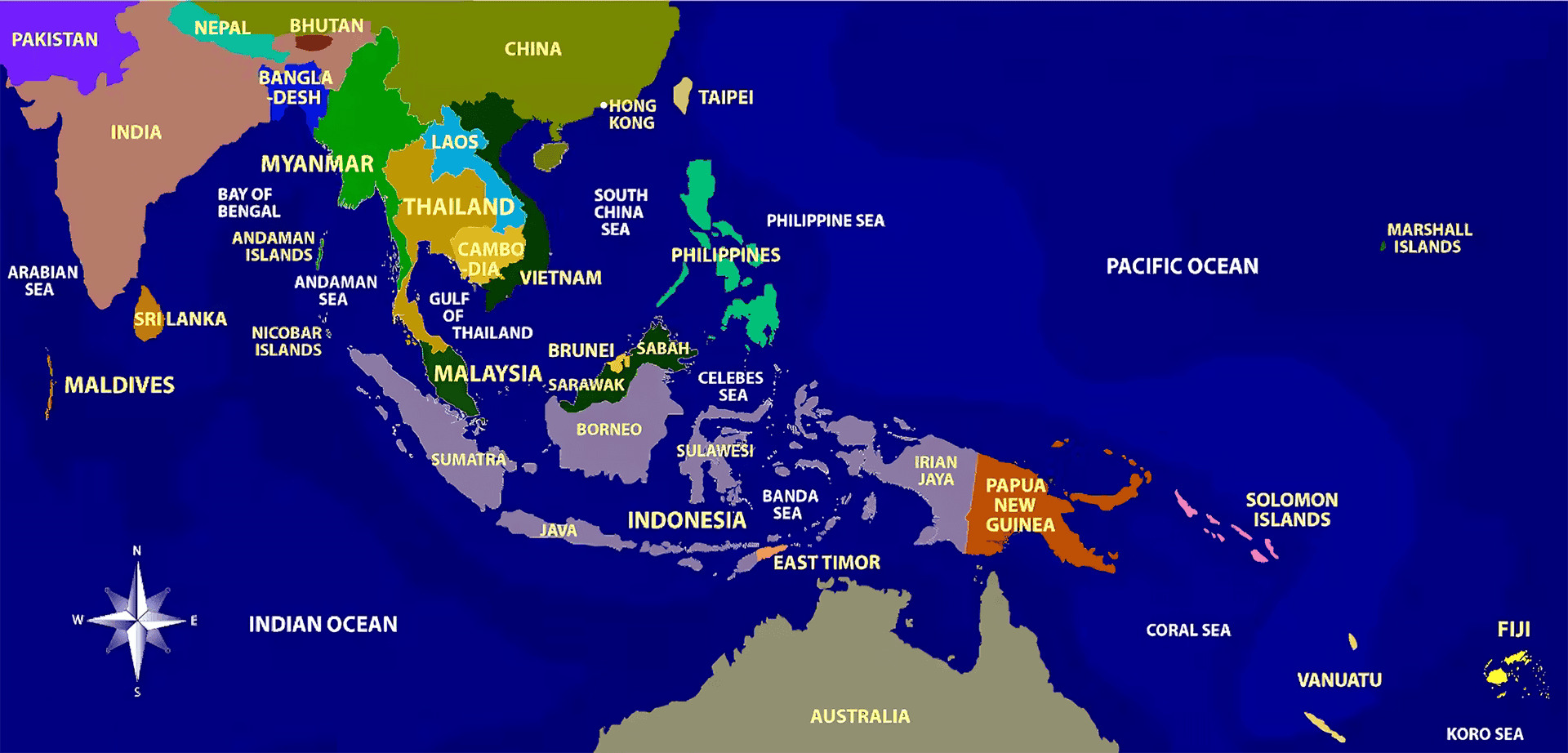
The Indo-Pacific region includes a vast number of countries across the Indian and Pacific Oceans, with its exact boundaries sometimes varying by country or framework. Key countries commonly cited include Australia, China, India, Japan, New Zealand, South Korea, the United States, and the ASEAN nations (like Indonesia, Malaysia, the Philippines, Singapore, and Vietnam). Other nations in the broader region, like Bangladesh, Pakistan, Sri Lanka, and various Pacific Island nations, are also considered part of this strategic area.

Core Indo-Pacific Countries:

East and Southeast Asia: Australia, Brunei, Cambodia, China, Indonesia, Japan, Malaysia, Myanmar (Burma), New Zealand, North Korea, Philippines, Singapore, South Korea, Taiwan, Thailand, Vietnam, and the Pacific Island nations.

South Asia: India, Bangladesh, Bhutan, Maldives, Nepal, and Sri Lanka.
Pacific: The United States and various Pacific Island nations like Fiji, Papua New Guinea, and others.

Africa: Some definitions of the Indo-Pacific extend to the eastern coast of Africa, including countries like Madagascar and the Indian Ocean islands

Strategic Importance

The Indo-Pacific region is a focus of major economic and geopolitical activity. It is home to four of the world's largest economies—the U.S., China, India, and Japan—and is significant for its trade routes, economic growth, and strategic importance, including managing China's growing influence. This has led to increased defense spending and security cooperation among various countries and blocs, such as the Quad (Australia, India, Japan, and the United States) and AUKUS (Australia, the United Kingdom, and the United States).

Prof. Dr. Mohammad Mahmodul Hasan


Top-notch strategic and globally minded professional with deep expertise in Indo-Pacific politics, security, and diplomacy. You bridge government, multilateral, and grassroots insights, combining cultural intelligence, risk forecasting, and innovative governance initiatives. Your work demonstrates a rare blend of analytical rigor, policy advisory capacity, and practical strategic leadership across regional and international arenas.

Comprehensive Indo-Pacific Political & Geostrategic Expertise

Strong Engagement with Global Government Systems

Diplomacy, Multilateralism & Legislative Advisory Capacity